
AI Probably Won't Replace Doctors. It May Still Reduce What They're Paid.
The job survives, but the dollar attached to it does not. The thesis behind The Income Variable, with the evidence from the last decade.

In 2016 Geoffrey Hinton said people should stop training radiologists. Ten years on, the radiologist workforce had grown 17%, 67% of radiologists called their practice understaffed, and inflation-adjusted Medicare payment for imaging had fallen 25% per beneficiary between 2005 and 2021. The two stories about AI and physicians were both told about that one specialty first, and both are half right. The replacement story: the machine reads the scan, writes the note, makes the diagnosis, and the physician becomes a supervisor or a memory. The reassurance story: medicine is licensed, embodied, and liability-bearing, the machine can't examine a belly or consent a patient, so relax.
The evidence from the last decade supports the second half of each. The job survives. The dollar attached to it does not hold still.
Classical physician finance treats income as the one fixed number on the page: save twenty percent of it, invest the savings in low-cost index funds, insure it against disability, and the plan runs itself. That advice is still right.
Why replacement is the wrong frame
The replacement story tests substitution, whether a machine can do the core task. Substitution is real, and for some tasks it is here. Mammography screening programs in Sweden and Denmark have cut radiologist screen-reading workload by a third to nearly half while finding more cancers, in trials covering more than 100,000 women. The FDA's list of AI-enabled devices passed 1,500 in 2026 and three quarters of them are radiology.
But substitution is one of five inputs that set what a clinician is paid, and it is the input the professional societies are best equipped to argue about. The other four are quieter. A machine never has to see a patient to move any of them.
- Demand. What it means: Whether the service is needed. How AI reaches it without replacing anyone: Better diagnostics and medical management remove downstream procedures; weight-loss drugs cutting bariatric volume by a third in two years is the template.
- Referral. What it means: Who controls your volume. How AI reaches it without replacing anyone: Integrated systems already steer referrals; AI referral management makes steering cheaper and finer-grained.
- Supply. What it means: Who else can do the work. How AI reaches it without replacing anyone: AI narrows the skill gap on standardized work, which widens who can do it; NPs and PAs already took a quarter of evaluation-and-management visits by 2019.
- Reimbursement. What it means: What is paid and to whom. How AI reaches it without replacing anyone: Algorithmic prior authorization and claim review; CMS's 2026 efficiency adjustment cut work RVUs on procedures by 2.5% on the assumption physicians got faster.
- Time. What it means: Units per day, and who keeps the gain. How AI reaches it without replacing anyone: Ambient scribes save real hours; the hours show up as visits and RVUs on the employer's ledger more often than as evenings at home.
Each row is developed, with sources, in How AI Could Reduce Physician Pay Without Replacing Physicians.
What the decade shows
Radiology is the natural experiment because it received the replacement prediction first. Job postings on the ACR Career Center went from 1,215 in 2014 to 4,438 in 2023, and over that decade the cumulative postings outnumbered graduating residents three to one.
The headcount story is the reassurance story, and it is true. The payment story runs the other way. Between 2005 and 2021 inflation-adjusted Medicare physician payment for imaging fell about 25% per beneficiary while the volume of work per beneficiary rose 13%. Radiologist caseloads rose 31% between 2018 and early 2024. Compensation rose in nominal terms because radiologists read more studies at a lower price per study. Where the AI dividend arrived, the worklist absorbed it as throughput. The radiology decade in detail.
Ambient AI scribes are the second experiment, and it is younger. Kaiser Permanente's Northern California group logged 2.5 million scribed encounters and about 15,700 physician hours saved in the first year. A five-health-system study published in 2026 found 13 minutes less EHR time per eight scheduled hours, no significant change in after-hours work, and a small rise in visits per week. The hours are real. Who keeps them is the open question, and the early data point toward the schedule template rather than the physician's evening. The scribe evidence, and where the hours go.
The moat holds, the rent shrinks
In the Swedish MASAI trial, AI support replaced the second radiologist's read on most of 100,000 screening mammograms, cut screen-reading workload 44%, and found more cancers. A tool that makes one reader as good as two shrinks the premium on the expert read even where every radiologist keeps the job. An ambient scribe and a decision-support tool let an advanced practice provider handle the standardized half of a specialty clinic, and NPs and PAs already delivered a quarter of evaluation-and-management visits by 2019. The specialist keeps the complex half, and the payer starts asking why the whole clinic is priced at the specialist rate.
Then there is the question of who captures whatever dividend exists. As of January 2026, 82% of U.S. physicians are employed by hospitals or corporate entities. An employed physician paid on work RVUs is, in accounting terms, labor. When a tool makes that labor more productive, the gain accrues first to the entity that owns the billing pathway and the schedule. The physician productivity data already show the wedge: work RVUs per full-time physician were up 9% from 2023 to late 2025 while compensation was up 6% and revenue per RVU slipped. That is before AI does anything at scale.
What this means for a plan
The classical foundation holds. A high savings rate still dominates every other decision. Broad, low-cost, diversified index investing is still the core, and AI's disruption of the income side does not touch that math. Own-occupation disability insurance still transfers the one risk it transfers.
What changes is one assumption underneath all of it: that the income feeding the plan is high, stable, and lifelong. When that becomes a variable, "how much and how long" becomes a planning question instead of a given. The margin for error shrinks. Career longevity, which classical advice treats as the physician's largest financial asset, starts to depend on positioning. And a three-to-six-month emergency fund, built for a general audience with diversified household income, has to be re-examined for a household whose income runs through one credential and often one employer.
A thirty-year forecast about how AI reshapes medicine is a bet; Geoffrey Hinton made the 2016 one about radiology and got the mechanism wrong. The right response is optionality: a plan that holds up across several futures rather than one that depends on a single prediction being right.
Where the book picks up
The Income Variable spends its first part on this thesis and its second part on the earning side: what protects a specialty, what the payer and the employer are doing to the dollar, and what a clinician can do about it deliberately, before a contract renewal or an income shock forces the question. The later parts rebuild the financial plan with income treated as a variable, including what to do in the year the shock arrives.
Start with the map to see where your specialty sits. Then join the launch list; the book is in production and the companion tools are free.
Sources
- Creative Destruction Lab, Machine Learning and the Market for Intelligence, Toronto, Oct 2016 (Hinton remarks)
- NRMP, Main Residency Match Results and Data 2026
- ACR Bulletin, Feb 2026: radiologist workforce update (+17.3% 2014–2023)
- Chen et al., AJNR 2025: ACR Career Center postings 2014–2023
- Dibble et al., JACR 2025: ACR/RBMA workforce survey (67% understaffed)
- Christensen et al., JACR 2023: Medicare imaging payment trends 2005–2021
- Davenport et al., JACR 2025: radiologist caseload growth 2018–2024
- FDA, Artificial Intelligence-Enabled Medical Devices list
- Lång K et al., Lancet 2026: MASAI trial results (AI-supported mammography screening)
- Lauritzen AD et al., Radiology 2024: AI in Danish breast cancer screening (RSNA summary)
- Tierney AA et al., NEJM Catalyst 2025: ambient AI scribes after one year and 2.5 million uses
- Rotenstein LS et al., JAMA 2026: ambient AI scribes across five health systems
- Tsai et al., JAMA Network Open 2024: GLP-1 use and bariatric surgery volume (Harvard summary)
- Patel SY et al., BMJ 2023: NP and PA share of visits, 2013–2019
- CMS, CY2026 Physician Fee Schedule final rule fact sheet
- Physicians Advocacy Institute / Avalere, Physician Employment Trends 2018–2026
- Kaufman Hall / Vizient, Physician Flash Report Q4 2025
This article is general information and analysis, not individualized medical, financial, investment, tax, or legal advice. See the Disclaimers page for the full statement.
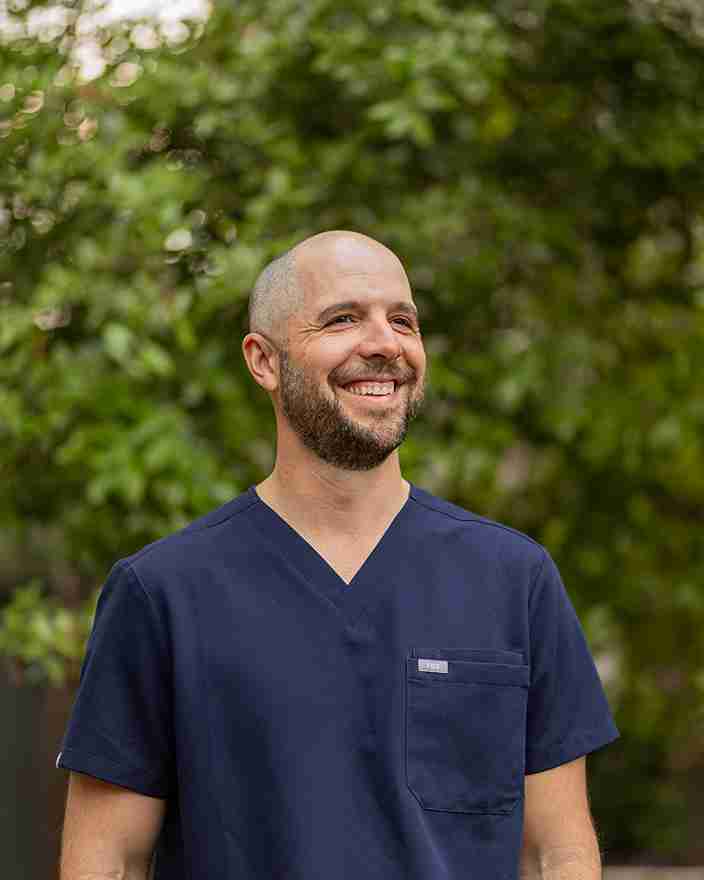
Brian P. Kelley, MD
Double board-certified reconstructive surgeon in Austin, Texas. Author of The Income Variable.
About the author



The earning side is changing. Stay ahead of it.
Join the launch list for book updates, new articles, and free companion tools.
By submitting, you agree to our Terms of Use and acknowledge our Privacy Policy.