
The Physician's Second Engine: Why Income From Labor Isn't Enough
The one-engine plan is right. Its assumption is the variable. What a second engine is, what it isn't, and the base rates that come with it.

Classical physician finance runs on one engine. You earn a high income for thirty years, save a fifth of it, put the savings in low-cost index funds, insure the income against disability, and let compounding do the rest. The White Coat Investor built a generation of financially literate physicians on that plan, and the plan is right. I follow it. This site and the book behind it are a layer on top of that plan.
But every plan rests on an assumption, and the one-engine plan's assumption is the engine: that the income is high, stable, and lasts long enough for the arithmetic to work. That assumption was safe for a long time. It is now the variable.
Where the one-engine plan is fragile
A physician's labor income is unusually concentrated in ways a generic personal finance book does not cover.
It runs through one credential. A physician's earning power is almost entirely specific to a license and a specialty, and both are exposed to the same set of pressures at once: demand, referral, supply, reimbursement, and time. Those pressures are laid out here. A household with two earners in different industries has diversified income. A physician household, even a dual-physician one, usually does not.
It runs through one employer, increasingly. As of January 2026, 82% of U.S. physicians are employed by hospitals or corporate entities. An employed physician's income is one contract with one counterparty, benchmarked against compensation surveys that the employing systems themselves produce.
And it starts late and, on current evidence, may end earlier than the plan assumes. The median indebted medical graduate leaves school owing about $205,000 and reaches a first attending job in their early to mid thirties. Classical physician finance solves the late start with the long career: thirty years of high income makes up for ten years of none. A 2026 Permanente Journal study of physicians who left clinical practice found the mean age at departure was 48.1, down from 57.1 in an earlier cohort; that is a figure for leavers, not a forecast for any individual career. Doximity's 2026 report found 46% of physicians considering early retirement, up from 34% a year earlier, and a 37,000-physician survey found 15% intending to leave their organization within two years, both of which are intentions rather than outcomes. Run it as a stress case: a career that starts at 33 and ends at 48 is fifteen years, and the compounding math was built for thirty. What a shorter or thinner earning window does to the retirement arithmetic is worked here.
Who captures the dollar
Every productivity gain in medicine, AI-driven or otherwise, has to land somewhere. When an ambient scribe frees an hour, when an AI pre-read lets a radiologist clear more studies, when a decision-support tool lets an advanced practice provider handle the routine half of a clinic, the value created goes by default to whoever owns the schedule, the billing pathway, the device, or the facility. For an employed physician paid per RVU, that is not you. You are, on the entity's books, labor, and the gain from more productive labor is booked by the entity. Meanwhile Medicare's professional fee has fallen a third in real terms since 2001 while the facility fee for the same procedures has risen with costs every year. The machinery is here.
The one-engine plan cannot fix this, because it operates entirely on the labor side: a 20% savings rate applied to a Medicare professional fee that has fallen 33% in real terms since 2001 is 20% of a smaller number. The structural response is to own some of the capital that the dollar re-routes toward. A second engine is income or equity that does not require your hands in a patient, and that sits on the receiving end of at least one of the flows that AI is redirecting.
What a second engine is, and isn't
It is an umbrella, not a list of side hustles. Practice equity or partnership, ownership in a surgery center or ancillary service, intellectual property, a skill-based business adjacent to your clinical work, real estate, and the investment portfolio itself are all forms of it. They differ in how much of your time they take, how much capital they need, and how correlated they are with the clinical income they are meant to hedge. They share the property that matters: they pay you as an owner rather than as labor.
Each form comes with a base rate, and the base rates are not generous. Most physician intellectual property earns nothing; in one of the most productive university licensing offices in the country, 1.6% of income-generating licenses produced 71% of the income in a representative year. Practice equity is harder to get than it was: private-equity-owned practice sites rose from about 800 in 2012 to nearly 5,800 in 2021, and the share of physicians in physician-owned practices fell from 60% to 42% over the same period, which means the partnership track that funded the previous generation's second engine has been sold in many markets. Surgery centers remain the exception; physicians hold ownership in about 90% of Medicare-certified ambulatory surgery centers, though access depends on specialty, state law, and whether a hospital already owns your referral base. Outside paid work is common (38% of physicians report some, mostly consulting, administration, teaching, and expert witness work), but most of it is labor income under another name and does nothing about the ownership problem.
Joining a large system is the sane response to administrative burden and payer scale, and nothing here says otherwise. Ownership is not a clean exit either. Owning a small practice is shrinking under the same reimbursement and consolidation pressures, and a second engine funded from clinical income is partly correlated with the thing it hedges.
How it fits with the foundation
The sequencing is the same as it always was. Cash reserve, insurance, a savings rate near 20% of gross, and a low-cost diversified core come first, and nothing about AI changes that order. The second engine is built from the surplus above the foundation, on a timeline set by how exposed your specialty is (the Specialty Exposure Map is the instrument) and by career stage. An early-career clinician in an exposed specialty has thirty years of exposure ahead and, with a median $205,000 of debt, the least capital to start with. Mid-career, the capital exists and the time is shorter. Late-career, the decision is mostly what to decouple before you stop.
One rule overrides the rest. Do not build the second engine out of the same bet as the first. A physician whose job is exposed to AI, whose portfolio is tilted to AI stocks, and whose side business sells AI tools to physicians has three engines that fail together. The book's chapter on how doctors will lose money on AI is largely a catalog of that mistake.
Where the book picks up
The Income Variable spends its second part on the earning side and its capstone chapter on the second engine: the public Medicare data that show the surgeon's shrinking share of the combined payment, the three layers of information asymmetry between an employed physician and the institution that measures their value, and each ownership vehicle with its base rate and the test it has to pass. The real estate and tax mechanics have chapters of their own, with the audit sensitivities stated plainly. The career-stage playbook sequences all of it. Join the launch list for the book and the free companion tools.
Sources
- White Coat Investor: the safe savings rate for physicians
- Physicians Advocacy Institute / Avalere, Physician Employment Trends 2018–2026
- AAMC, Medical Student Education: Debt, Costs, and Loan Repayment Fact Card (Class of 2024)
- Chen S et al., The Permanente Journal 2026: why physicians leave clinical practice early (summary)
- Doximity, Physician Compensation Report 2026
- Rotenstein LS et al., JAMA Network Open 2026: physician intent to reduce hours or leave, 2022–2024
- AMA, Medicare updates compared with inflation, 2001–2026
- Stanford Office of Technology Licensing: opportunities and perils of university licensing (income distribution)
- Abdelhadi et al., Health Affairs 2024: private equity acquisitions of physician practices (NIHCM summary)
- AMA, 2024 Physician Practice Benchmark Survey: practice ownership
- ASC Data, Feb 2025: ambulatory surgery center industry overview (ownership)
- Medscape, Physician Compensation Report 2025: outside paid work
This article is general information and analysis, not individualized medical, financial, investment, tax, or legal advice. See the Disclaimers page for the full statement.
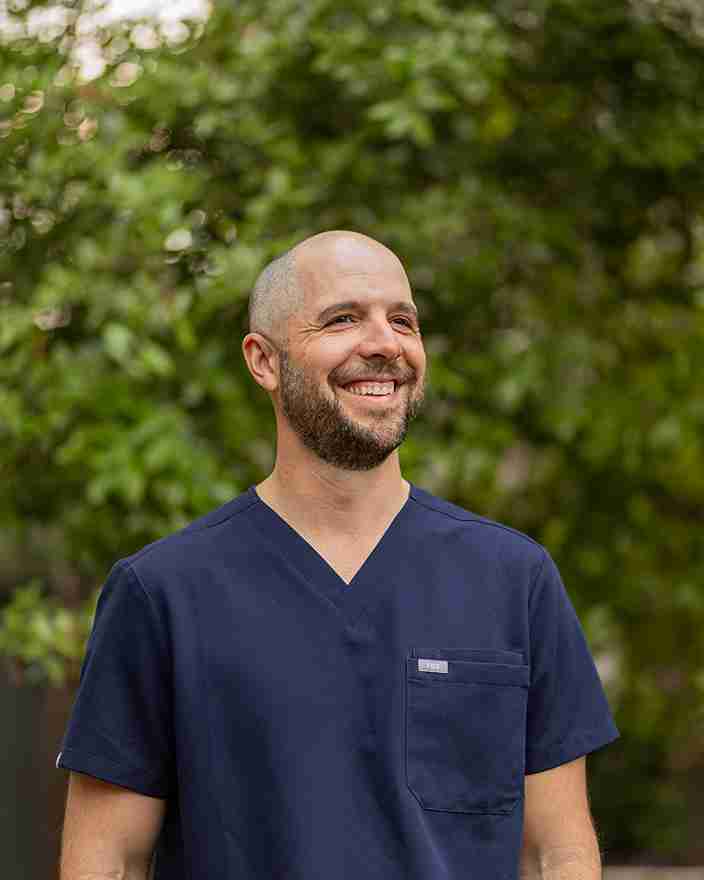
Brian P. Kelley, MD
Double board-certified reconstructive surgeon in Austin, Texas. Author of The Income Variable.
About the author



The earning side is changing. Stay ahead of it.
Join the launch list for book updates, new articles, and free companion tools.
By submitting, you agree to our Terms of Use and acknowledge our Privacy Policy.