
How AI Could Reduce Physician Pay Without Replacing Physicians
Demand, referral, supply, reimbursement, time: the five channels, the evidence for each, and who ends up with the dollar

Between the second half of 2022 and the second half of 2023, as GLP-1 prescribing more than doubled, bariatric surgery volume among 17 million insured adults fell 25.6%. No surgeon was replaced. The indication moved upstream to a prescription, and the procedural volume followed it out of the operating room.
That is the first of five channels through which AI reaches a clinician's income, and none of them requires a machine to see a patient. Income is volume times price times your share of the payment, spread over the hours you can work; the channels are demand, referral, supply, reimbursement, and time.
The public argument is stuck on the wrong channel. Substitution, whether AI can do the core task, is real but narrow, and radiology has spent a decade showing that a specialty can win the substitution fight and still lose a quarter of its real unit price. The four other channels are quieter, better documented, and already moving.
1. Demand: the work stops needing to be done
By 2024 the bariatric decline had reached 34% from the 2022 baseline, and nothing about it involved AI. AI's contribution to demand is to make upstream diagnosis and medical management better, earlier, and cheaper, which removes downstream work. NHS England reports that an AI skin-lesion tool can discharge about 30% of urgent skin-cancer referrals without a dermatologist visit, out of 650,000 such referrals a year. Every one of those is a visit that would have been billed. Demand can also rise; imaging is the standing example of a field where better detection generated more downstream work rather than less. Demand is a variable, and a specialty whose volume depends on a condition that medical management is learning to prevent is exposed on this channel regardless of how hard its procedures are.
2. Referral: someone else controls your volume
Most specialists don't acquire patients. They receive them, from a primary care clinician, an emergency department, or an upstream specialist, and increasingly from a health system that employs all three. When Medicare claims for the full population were analyzed, vertical integration of physicians into hospital systems raised referrals to the system's own higher-priced facilities by roughly 10%, and an earlier study found hospital ownership of a practice dramatically raised the odds that its patients used the owning hospital. Referral steering is not a hypothesis; it is a measured behavior of integrated systems.
AI makes steering cheaper and more precise. Referral-management tools that score leakage, match patients to in-network capacity, and route by cost are a mature product category. For the receiving specialist this means the volume that shows up in clinic is a decision made somewhere else, and it can be revised without anyone telling you. A specialty scored on the Specialty Exposure Map as referral-dependent is exposed here even if the machine can't do a single thing the specialist does.
3. Supply: more people can do the work
Substitution asks whether a machine can do the task. Supply asks a different question, with a longer track record: whether a machine lets someone else do it.
There are now more than 461,000 licensed nurse practitioners in the United States, growing about 7% a year, and 201,000 certified physician assistants, up 27% since 2021. The Bureau of Labor Statistics projects NP employment to grow 41% and PA employment 21% between 2025 and 2035. Between 2013 and 2019 the share of evaluation-and-management visits delivered by NPs and PAs rose from 14% to 25.6%, and the specialist-physician share fell. More than half of states now grant NPs full practice authority.
AI accelerates this because it narrows the skill gap on standardized work. Decision support, ambient documentation, and image pre-reads let a clinician with less training perform closer to the specialist on the predictable half of a clinic. Once the hardest step is standardized, the case for pricing the whole clinic at the specialist rate weakens, and the supply of people who can do the routine half expands. The physician's own training becomes a variable here too: AI-assisted training and simulation can shorten the time to competence, which expands supply from below.
4. Reimbursement: the payer decides it is worth less
Payers already run AI at scale on this channel, against the claim rather than the clinician.
On the commercial side, ProPublica reported in 2023 that Cigna's PxDx system allowed medical directors to deny more than 300,000 claims over two months at an average of 1.2 seconds each. Litigation over UnitedHealth's nH Predict algorithm, which the complaint alleges was used to cut off post-acute care with denials that were reversed on appeal more than 90% of the time, survived a motion to dismiss in 2025 and moved into discovery in 2026. A Senate investigation found UnitedHealthcare's prior-authorization denial rate for post-acute care in Medicare Advantage rose from 10.9% in 2020 to 22.7% in 2022. States have started to respond; California, Texas, Arizona, Maryland, and Nebraska have passed laws requiring a licensed clinician, rather than an automated system, to make medical-necessity denials. The physician's billed RVU is unchanged in every one of these cases. What changes is realized revenue and the cost of appealing.
On the public side, CMS launched the WISeR model on January 1, 2026: AI-assisted prior authorization in traditional Medicare, running through 2031 in Arizona, New Jersey, Ohio, Oklahoma, Texas, and Washington, covering a list of services that includes epidural steroid injections, cervical fusion, vertebral augmentation, nerve stimulators, and skin substitutes. The technology vendors are paid a share of the spending they avert. Congress has moved against it in both chambers; a Senate resolution to block it failed narrowly in July 2026.
And then there is the fee schedule itself. For 2026 CMS applied a 2.5% "efficiency adjustment" to the work RVUs of every non-time-based service, on the stated assumption that physicians have gotten faster at procedures and imaging than the surveys say. It exempted office visits and time-based codes. It also shifted practice-expense payment away from facility-based physicians and toward office-based ones. The proposed 2027 conversion factor is a cut of 1.7% from 2026. Policy assumes AI-enabled efficiency and prices it in before it arrives at your practice. The mechanics, with dates, are here.
5. Time: the hours you get back, and who keeps them
Time is the fifth input and it runs in both directions. Ambient AI scribes save documentation time in every serious study: 13 to 16 minutes per eight scheduled hours across five health systems, 22 minutes a day of note time in a randomized trial at UW Health, 15,700 physician hours in the first year at Kaiser Permanente Northern California. The offload is real.
The other direction is the productivity treadmill. Work RVUs per full-time physician rose 9% between 2023 and late 2025 while compensation rose 6% and net revenue per RVU fell. In the five-system scribe study, after-hours EHR time did not change; visits per week went up. At UCSF, scribe adopters generated 5.8% more RVUs and 2.8% more encounters, about $3,000 a year per physician, which went to the employer. When a tool makes each unit of work faster, the default is that the schedule fills the space. Who gets to keep the hours is decided by the employer, not the software.
The chain, in one table
- Demand. What moves: Whether the service is needed. Evidence already in hand: Bariatric volume down a third in two years as GLP-1 use rose; AI triage discharging ~30% of urgent skin referrals in the NHS. What to watch: Upstream drugs and diagnostics in your own referral stream.
- Referral. What moves: Who sends you volume. Evidence already in hand: Integration raised referrals to owned facilities ~10% in Medicare. What to watch: System ownership of your referral base; referral-management software.
- Supply. What moves: Who else can do it. Evidence already in hand: NP/PA share of visits 14%→26% (2013–2019); NPs +7%/yr; BLS +41% NP growth to 2035. What to watch: Scope-of-practice bills; AI decision support in your clinic's routine work.
- Reimbursement. What moves: Price and who is paid. Evidence already in hand: Algorithmic denials in commercial and MA; WISeR in traditional Medicare; −2.5% efficiency adjustment. What to watch: CY2027 final rule (Nov 2026); denial and reversal rates by payer.
- Time. What moves: Units per day and who keeps the gain. Evidence already in hand: Scribes save 13–22 min/day; RVUs per physician +9% vs comp +6% since 2023. What to watch: Your schedule template after any tool rollout.
Who captures the dollar
Every one of the five channels either removes a dollar or re-routes it, and the re-routing has a consistent destination: whoever owns the billing pathway, the referral funnel, the device, or the schedule. As of January 2026 that is not the physician. Eighty-two percent of U.S. physicians are employed by hospitals or corporate entities, up by a quarter of a million since 2018. An employed physician paid on work RVUs is, on the entity's ledger, labor. When labor gets more productive, the gain is booked by the entity by default.
Employment is not the mistake. For most clinicians it is the sane response to administrative burden and payer scale, and the alternative, owning a small practice, is shrinking under the same pressures. The mistake is to build a financial plan on whether AI will replace you. Build it on which of these five channels reach your income, how hard, and who is on the other side of each. The response, at the level of a plan, is a second engine: income or equity that sits on the receiving side of at least one of those flows.
Where to go from here
The Specialty Exposure Map scores 97 specialties on four of these five channels; the method is here. If you want to see what a 10, 20, or 30% income change does to a physician's retirement arithmetic, that is worked here.
The Income Variable builds the plan. Its second part takes each channel in depth, with the evidence graded and the conflicts disclosed, and its later parts rebuild physician personal finance with income treated as the variable it has become, including a triage protocol for the year the shock arrives and a negotiation chapter for the contract that comes before it. Join the launch list.
Sources
- Tsai et al., JAMA Network Open 2024: GLP-1 use and bariatric surgery volume (Harvard summary)
- JAMA Surgery 2026: bariatric surgery volume 2022–2024 and GLP-1 uptake
- NHS England: AI-based skin lesion analysis (DERM) in urgent skin cancer referrals
- Whaley C, Zhao X, Journal of Public Economics 2024: vertical integration and referral patterns in Medicare (RAND)
- Baker LC, Bundorf MK, Kessler DP, NBER 2015: hospital ownership of physician practices and patient referrals
- AANP, Nov 2025: 2025 nurse practitioner count
- NCCPA, 2025 Statistical Profile of Board Certified PAs
- BLS Occupational Outlook Handbook: nurse practitioners (2025–35 projections)
- BLS Occupational Outlook Handbook: physician assistants (2025–35 projections)
- Patel SY et al., BMJ 2023: NP and PA share of visits, 2013–2019
- ProPublica, Mar 2023: How Cigna's PxDx system denies claims
- Estate of Lokken v. UnitedHealth Group, D. Minn., order of Feb 13, 2025
- U.S. Senate Permanent Subcommittee on Investigations, Oct 2024: Refusal of Recovery (Medicare Advantage post-acute denials)
- Mello MM, Rose S, JAMA Health Forum 2024: algorithmic denials
- AMA, Nov 2025: state legislative update on AI in health care
- CMS Innovation Center: WISeR model
- Federal Register, Jul 1, 2025: WISeR model notice
- Medicare Rights Center, Jul 2026: Senate vote on blocking WISeR
- CMS, CY2026 Physician Fee Schedule final rule fact sheet
- CMS, CY2027 Physician Fee Schedule proposed rule fact sheet
- Rotenstein LS et al., JAMA 2026: ambient AI scribes across five health systems
- Afshar M et al., NEJM AI 2025: stepped-wedge randomized trial of an ambient AI scribe at UW Health
- Tierney AA et al., NEJM Catalyst 2025: ambient AI scribes after one year
- Holmgren AJ et al., JAMA Network Open 2026: AI scribes, productivity and revenue at UCSF
- Kaufman Hall / Vizient, Physician Flash Report Q4 2025
- Physicians Advocacy Institute / Avalere, Physician Employment Trends 2018–2026
This article is general information and analysis, not individualized medical, financial, investment, tax, or legal advice. See the Disclaimers page for the full statement.
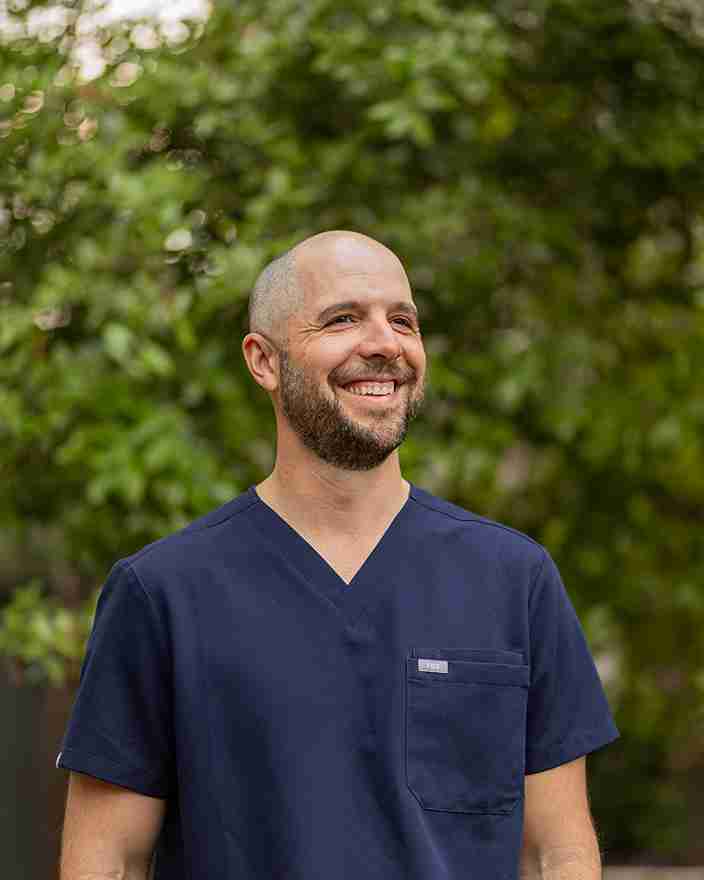
Brian P. Kelley, MD
Double board-certified reconstructive surgeon in Austin, Texas. Author of The Income Variable.
About the author



The earning side is changing. Stay ahead of it.
Join the launch list for book updates, new articles, and free companion tools.
By submitting, you agree to our Terms of Use and acknowledge our Privacy Policy.