
Will AI Replace Radiologists? What the Last Decade Actually Shows
Ten years after the most quoted prediction in medical AI: more radiologists, a record match, 1,500 FDA-cleared algorithms, and a falling price per read

In October 2016, at a machine learning conference in Toronto, Geoffrey Hinton said that people should stop training radiologists. Deep learning would outperform them within five years, he said, maybe ten, and there were plenty of radiologists already. The clip is still quoted, and the horizon he gave has now run out.
The prediction failed on headcount and succeeded on something he didn't predict. There are more radiologists than ever, they are harder to hire than ever, and they are paid less per study than they were, for more studies, in less time. The job survived. The economics of the job moved.
Ten years after the prediction
- Diagnostic radiology residency positions offered (NRMP, PGY-2). Around 2016: 982 (2016). Most recent: 1,083 (2026).
- Fill rate. Around 2016: 96.4%. Most recent: 98.4%.
- U.S. MD senior applicants. Around 2016: 805 (2016); dipped to 870 in 2020. Most recent: 1,050 (2026).
- Radiologist workforce. Around 2016: Not tracked. Most recent: +17.3% from 2014 to 2023 (ACR).
- ACR Career Center job postings. Around 2016: 1,215 (2014). Most recent: 4,438 (2023).
- FDA-authorized AI-enabled devices, all specialties. Around 2016: Dozens. Most recent: 1,524 as of March 2026; 76% radiology.
- Radiology compensation (Doximity, nominal). Around 2016: $408,000 (2017 report). Most recent: $609,684 (2026 report).
- Radiologist caseload. Around 2016: Not tracked. Most recent: +31% from 2018 to early 2024.
- Inflation-adjusted Medicare imaging payment per beneficiary. Around 2016: $252 (2005). Most recent: $189 (2021), a 25% real decline while work per beneficiary rose 13%.
Figures are as of September 2026 and the perishable ones will be updated.
What happened to the headcount
The prediction should have shown up in the residency match first. It did, briefly: U.S. senior applicants to diagnostic radiology fell from 1,000 in 2018 to 870 in 2020, and positions still filled above 97% because international and osteopathic graduates took the slots. The 2026 match offered 1,083 positions, the most on record, and filled 98.4% of them.
Meanwhile the practicing workforce grew and the shortage got worse anyway. The number of radiologists rose 17% between 2014 and 2023. Job postings on the ACR Career Center went from 1,215 in 2014 to 4,438 in 2023, and over that decade the cumulative postings outnumbered graduating residents three to one. A 2025 survey found 67% of radiologists reporting their practice understaffed. Mayo Clinic, one of the heaviest institutional adopters of imaging AI, grew its radiology staff by more than half over the period. The Harvey L. Neiman Health Policy Institute projects radiologist supply and imaging demand both rising through 2055, with attrition running 50% higher since 2020 than before.
Radiologists are not being replaced. They are leaving faster, mid-career, and the reasons are the reasons physicians everywhere give: volume, pace, and the treadmill.
What happened to the AI
The technology did roughly what Hinton said it would, for the task he was describing. On narrow image-classification tasks, algorithms reached or passed radiologist performance. The FDA's list of AI-enabled devices stood at 1,524 in its June 2026 update, and 1,163 of them are radiology devices. More than 300 were added in 2025 alone.
The strongest evidence is in screening mammography. The Swedish MASAI trial, with more than 100,000 women, found AI-supported screening cut radiologist screen-reading workload by 44% and, in its 2026 results, reduced interval cancers by about 12% with higher sensitivity. A Danish program that introduced AI into screening reported a third less reading workload, more cancers detected, and fewer false positives. These are not vendor claims. They are prospective trials and population programs in national health systems.
And yet: a 2020 ACR survey found about 30% of radiologists reporting clinical use of AI, and a 2025 survey of academic department chairs found 84% reporting that their radiologists were unconcerned about displacement. I could not find a documented case anywhere of an AI deployment reducing radiologist headcount or pay. The FDA clears them as assistive. The radiologist signs the report and carries the liability. What the AI changed was the number of studies a radiologist could get through.
What happened to the pay
Radiology compensation rose about 49% in nominal terms from 2016 to 2025, against roughly 34% cumulative consumer inflation, so real pay went up by something like a tenth. Radiology was the only specialty in the top ten for compensation growth in both of Doximity's last two reports.
The unit price went the other way. The Deficit Reduction Act of 2005 capped the technical component of imaging at the lower of the physician fee schedule and hospital outpatient rates. Multiple-procedure payment reductions cut the technical component for second and subsequent studies in the same session by half, and trimmed the professional component. Inflation-adjusted Medicare physician payment for imaging fell from $252 per beneficiary in 2005 to $189 in 2021, a 25% real decline, while relative value units per beneficiary rose 13%. Radiologists made more money by reading more studies at a lower price each. Caseloads rose 31% between 2018 and early 2024, about 5% a year. Turnaround time on Medicare outpatient interpretations rose 177% between 2014 and 2024, which is what a specialty looks like when demand outruns supply and the price per unit is falling at the same time.
Whatever throughput the AI added went into the denominator.
Why the prediction missed
Hinton later said he was off by about a factor of three on timing but right in the long run, and in a 2025 interview he narrowed the claim to image analysis and said AI would make radiologists more efficient and more accurate. He had predicted substitution of a task and described it as replacement of a job. Substitution is one of five inputs that set a specialty's income. The other four did the work.
Demand rose. Imaging volume grows with an aging population and with every new indication, and AI that finds more cancers generates more downstream imaging rather than less. Referral was never the constraint; ordering clinicians order more when turnaround is faster, and turnaround on Medicare outpatient reads still rose 177% between 2014 and 2024. Supply did not shrink, because the training pipeline recovered within three years and the workforce grew 17%, but it also didn't grow fast enough, because attrition accelerated. Reimbursement absorbed the gain: the payer cut the unit price on the assumption of efficiency, so the AI dividend became throughput rather than income. And time, the fifth input, ran the wrong way. The tool made each read faster, and the schedule filled the space.
The prediction also missed the regulatory shape of the technology. Every one of those 1,163 radiology devices was cleared as a tool used by a radiologist. There is one instructive exception outside radiology. CPT code 92229, established in 2022, pays for autonomous AI detection of diabetic retinopathy with no specialist read at all. The payment goes to the practice operating the camera, which is usually a primary care office. That is what substitution looks like when it does arrive: not a radiologist replaced, but a professional fee re-routed to whoever owns the device.
What the next decade probably looks like
Headcount keeps growing; the Neiman Institute projects supply rising through 2055. Price per read keeps falling, so each radiologist signs more reads, and the gap between what the work generates and what the person signing it is paid widens. AI-assisted reading lifts the median radiologist, which shrinks the premium on subspecialty skill even where the subspecialist keeps the job.
The variable that decides how much of this a given radiologist feels is not the algorithm. It is who owns the throughput. A radiologist who owns a share of the practice that deploys the AI captures some of the dividend. A radiologist employed by a health system or a private-equity-backed group and paid per RVU is the throughput. As of January 2026, 82% of U.S. physicians are in the second category.
What this means for everyone else
Radiology got the prediction first, so it ran the experiment first. The result is a template for the rest of medicine: the specialty survives the substitution threat and loses on the four inputs nobody argued about. Those inputs are laid out for every specialty here, and the Specialty Exposure Map scores all 97 specialties on them.
For a radiologist's own plan, the question is not whether the job exists in 2036. It almost certainly does. The question is what a plan looks like when the price per unit falls at a few percent a year in real terms, the schedule fills every gap the tools open, and the median career is ending earlier than it used to. That is a personal finance problem before it is a technology problem.
Where the book picks up
The Income Variable takes the radiology decade as one data point in a larger argument: which kinds of clinical work hold up, why the income can fall anyway, who captures the productivity gains from AI, and how to build a plan that doesn't depend on any one forecast being right. Join the launch list for the book and the free companion tools.
Sources
- Creative Destruction Lab, Machine Learning and the Market for Intelligence, Toronto, Oct 27, 2016
- Creative Destruction Lab, video: Geoff Hinton on radiology (2016)
- Topol E, Ground Truths: interview with Geoffrey Hinton, Dec 2023 ("off by about a factor of three")
- Lohr S, New York Times, May 14, 2025: Your A.I. Radiologist Will Not Be With You Soon
- NRMP, Main Residency Match Results and Data 2016
- NRMP, Main Residency Match Results and Data 2020
- NRMP, Main Residency Match Results and Data 2025
- NRMP, Main Residency Match Results and Data 2026
- ACR Bulletin, Feb 2026: radiologist workforce update
- Chen et al., AJNR 2025: ACR Career Center postings vs. graduates, 2014–2023
- Dibble et al., JACR 2025: ACR/RBMA workforce survey
- Harvey L. Neiman Health Policy Institute, Feb 2025: radiologist supply and imaging demand projections to 2055
- Harvey L. Neiman Health Policy Institute, Aug 2026: interpretation turnaround time 2014–2024
- Davenport et al., JACR 2025: radiologist caseload growth 2018–2024
- FDA, Artificial Intelligence-Enabled Medical Devices list
- Radiology Business, Jun 2026: FDA list update (1,524 devices, 1,163 radiology)
- Lång K et al., Lancet 2026: MASAI trial
- Lauritzen AD et al., Radiology 2024: AI in Danish screening (RSNA summary)
- Allen B et al., JACR 2021: 2020 ACR Data Science Institute AI survey
- Burnside ES et al., JACR 2025: academic radiology chairs on AI (SCARD survey)
- Doximity, Physician Compensation Report 2017
- Doximity, Physician Compensation Report 2026
- Christensen et al., JACR 2023: budget neutrality and Medicare reimbursement trends for radiologists, 2005–2021
- Noridian Medicare: multiple procedure payment reduction for diagnostic imaging
- Federal Register, CY2022 Physician Fee Schedule final rule (CPT 92229, autonomous AI retinal imaging)
- Physicians Advocacy Institute / Avalere, Physician Employment Trends 2018–2026
This article is general information and analysis, not individualized medical, financial, investment, tax, or legal advice. See the Disclaimers page for the full statement.
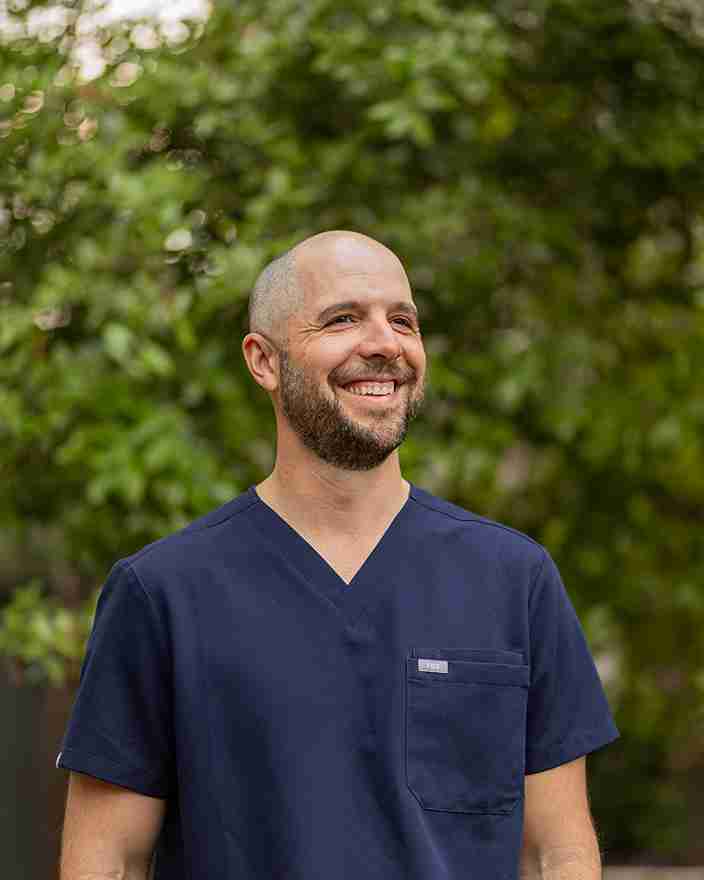
Brian P. Kelley, MD
Double board-certified reconstructive surgeon in Austin, Texas. Author of The Income Variable.
About the author



The earning side is changing. Stay ahead of it.
Join the launch list for book updates, new articles, and free companion tools.
By submitting, you agree to our Terms of Use and acknowledge our Privacy Policy.