
Will AI Replace Dermatologists? Where Dermatology Income Is Actually Exposed
In England an AI triage tool could discharge about 30% of urgent skin-cancer referrals without a dermatologist, on NHS England's estimate. In the U.S. the cleared device points at primary care. Where dermatology income is exposed, with sources.

Dermatology services in the UK receive about one million referrals a year from primary care. Sixty percent of them go down the urgent skin-cancer pathway, and 6% of those turn out to be cancer. NICE has given conditional approval, for three years, to an AI system called DERM that reads a dermoscopic photograph and discharges a benign lesion without a dermatologist ever seeing it; NHS England's guidance estimates it could discharge about 30% of urgent-pathway cases. The tool does not replace the dermatologist who treats the 6%. It removes a share of the 94% who would have been seen and billed.
In the United States that triage layer has not arrived. What has is a set of pressures on the same visit from other directions.
Where dermatology stands
- Average compensation, Medscape 2026. Most recent: $448,000.
- Average compensation, Doximity 2026. Most recent: $497,509.
- 2026 Match. Most recent: 546 PGY-2 positions, 99.8% filled, 79.5% by U.S. MD seniors; 31 PGY-1 positions, all filled.
- New melanoma cases, ACS projection. Most recent: About 112,000 in 2026; incidence rising slightly at ages 50 and older.
- Share of dermatology office visits handled by NPs and PAs, Medicare. Most recent: 15.5% in 2013 to 27.4% in 2020.
- FDA-cleared skin-cancer AI device. Most recent: DermaSensor (2024), indicated for primary care physicians; 96% sensitivity, 21% specificity.
- Autonomous AI triage in clinical use. Most recent: DERM, NHS England, conditional NICE approval; none in the U.S.
- 2026 efficiency adjustment. Most recent: −2.5% on work values for procedural codes; office E/M exempt.
- HRSA supply adequacy, 2038. Most recent: 95% (near balance nationally; 39% in nonmetro areas in 2021).
- Burnout, AMA 2025 data. Most recent: 31.5%, ten points below the physician average.
Figures are as of October 2026 and the perishable ones will be updated.
Substitution: the gate, not the diagnosis
Two devices define the current state. DERM, from Skin Analytics, is the one autonomous skin-lesion system in routine clinical use in a major health system, and NICE's approval, issued May 1, 2025, comes with conditions: adults only, mandatory additional clinician review for patients with darker skin tones during the evidence period, and further evidence before permanent approval. NICE's announcement estimates that it could roughly halve urgent-pathway referrals to dermatologists compared with teledermatology alone.
DermaSensor, cleared by the FDA in January 2024 under the de novo pathway, is indicated for primary care physicians and reads a lesion with elastic scattering spectroscopy. In the trial submitted for clearance, across 22 sites and 1,005 patients, it reached 96% sensitivity against 83% for unaided primary care physicians, at 21% specificity. A device with 21% specificity refers four benign lesions for every one it correctly clears. In its current form it generates dermatology visits and biopsies rather than removing them. The substitution risk for a U.S. dermatologist is a DERM-style triage layer, and the regulatory and evidence path for that layer in the United States has not been walked.
Demand: the disease is growing, the visit is what moves
Melanoma incidence is rising slightly among people 50 and older, and the American Cancer Society projects about 112,000 new cases in 2026 and 8,510 deaths. Skin cancer as a whole, the largest volume category in dermatology, grows with the population over 65. The demand exposure is not to the disease count. It is to the ratio of visits to diagnoses, which is the 94% in the NHS pathway, and every triage tool, teledermatology program and primary-care device is aimed at that ratio from one side or the other.
Referral: a gate being built in front of an open door
Dermatology in the United States is largely direct-access; most PPO products have no gatekeeper. The specialty's referral exposure is a gate being inserted where none existed. Teledermatology is the insertion. A store-and-forward program at Penn cut in-person visits by 27% in an underserved Philadelphia community. The chief executive of Miiskin, a virtual dermatology platform, says generative AI tools for intake and messaging have cut waits from more than 30 days to 24 to 48 hours. In a 2025 survey commissioned by Miiskin, 85% of patients said they preferred in-person care and more than half said they would choose a virtual visit to be seen sooner. The gate is being built by patients' preference for speed, and the entity that owns the platform decides which dermatologist, if any, is on the other side of it.
Supply: a task shift measured visit by visit
Among 109.4 million Medicare dermatology office visits between 2013 and 2020, the share performed by nurse practitioners and physician assistants rose from 15.5% to 27.4%, and advanced practice clinicians rose from 27.7% to 37.0% of dermatology clinicians billing Medicare, with 8,444 of them and 14,402 physician dermatologists in the 2013 to 2020 data. Their annual growth in every procedure category ran between 10% and 12.7%, above the physician rate throughout. In the 2023 JAMA Dermatology study that reports those figures, more than a quarter of Medicare dermatology office visits were already performed by someone other than a dermatologist.
The practice model that produced those numbers is the same one that private equity built: a dermatologist supervising several extenders across several sites. The dermatologist's income in that model is a share of what the extenders generate, and the share is set by whoever owns the practice.
In my practice, skin-cancer reconstruction referrals usually come from Mohs surgeons, from ENT, or from general surgery after a wide local excision, and the referring clinicians are usually physicians. Upstream of them, in the general dermatology practices that send those patients on, more of the care runs through physician assistants and nurse practitioners, and private equity owners may employ more of them for these patients over time.
Reimbursement: procedural codes take the efficiency cut
Dermatology's revenue base is procedural: biopsies (11102 to 11107), destructions (the 17000 series), excisions and Mohs (the 17311 series). The 2026 physician fee schedule cut work values and intraservice time on 91% of physician services by 2.5% and exempted office visits, care management and other time-based codes. A procedural dermatology practice absorbs the cut nearly in full. The same rule shifted practice-expense allocation toward office settings, which the AMA estimated would raise payment for services performed outside facilities by 4%, and the conversion factor rose 3.26%, 2.5 points of it from a one-year congressional increase that expires at the end of 2026. The specialty's net 2026 change sits in CMS's specialty impact table, and the direction inside it is clear: the procedures lost value and the office visits held. CMS intends to apply the efficiency adjustment again every three years. Its July 2026 proposed rule would lower the conversion factor 1.68% for 2027.
Workforce and career length
Dermatology is the specialty closest to balance in HRSA's December 2025 projections, at 95% of demand in 2038. Specialty-specific modeling on the same government simulation puts supply growth at 12.45% and demand growth at 12.70% by 2036, and the national balance hides a geographic split: metropolitan areas were at 108% adequacy in 2021, nonmetropolitan areas at 39%. Burnout, at 31.5% in the AMA's 2025 data, sits ten points below the physician average, and the 2026 Match filled 545 of 546 PGY-2 positions, 79.5% of them with U.S. MD seniors. A dermatologist's career is long and the specialty is not short. Those are the conditions under which supply-side substitution, not attrition, sets the price.
What this means for a dermatologist
The replacement question has an English answer and no American one yet. The exposure that is live in the United States runs through a visit mix that is already 27% non-physician, a platform layer that is turning a direct-access specialty into a triaged one, and a fee schedule that lowers procedural work values on a three-year cadence while leaving the office visit alone. The Specialty Exposure Map scores those inputs for dermatology and its subspecialties alongside the other specialties on the map.
The variable that decides how much of this a given dermatologist feels is ownership. A dermatologist who owns the practice that supervises the extenders and runs the platform captures the productivity. One employed by a group that owns both is the cost line the productivity is measured against. The five channels that connect a tool to a paycheck are laid out here.
Where the book picks up
The Income Variable uses dermatology as the case study for referral exposure in a direct-access specialty, and for what happens to a physician's share when the practice that employs them is the one deploying the tools. The chapter on the second engine takes up practice equity as the response, with its base rates stated. Join the launch list for the book and the free companion tools.
Sources
- NICE: AI skin cancer detection system (DERM) approved for conditional NHS use
- NHS England: AI-based skin lesion analysis technology in the urgent suspected skin cancer pathway
- MedTech Dive, Jan 2024: FDA de novo clearance of DermaSensor (pivotal trial performance)
- American Cancer Society, Cancer Facts & Figures 2026: melanoma key statistics
- Managed Healthcare Executive, Dec 2025: teledermatology expansion, Penn program, Miiskin survey
- JAMA Dermatology, Aug 2023: advanced practice clinicians in Medicare dermatology office visits, 2013–2020
- AMA, CY2026 Medicare physician fee schedule final rule summary (efficiency adjustment, practice expense reallocation)
- CMS, MLN summary of the CY2026 physician fee schedule final rule
- CMS, Jul 2026: CY2027 Physician Fee Schedule proposed rule fact sheet
- HFMA, Dec 2025: CY2026 physician fee schedule specialty impact tables
- HRSA, Dec 2025: physician supply adequacy projections to 2038
- Archives of Dermatological Research, May 2024: dermatology workforce projections to 2036 by metro status
- AMA, Apr 2026: physician burnout by specialty, 2025 data
- NRMP, Main Residency Match Results and Data 2026
- Medscape Physician Compensation Report 2026, specialty averages (via Becker's)
- Doximity, 2026 Physician Compensation Report
This article is general information and analysis, not individualized medical, financial, investment, tax, or legal advice. See the Disclaimers page for the full statement.
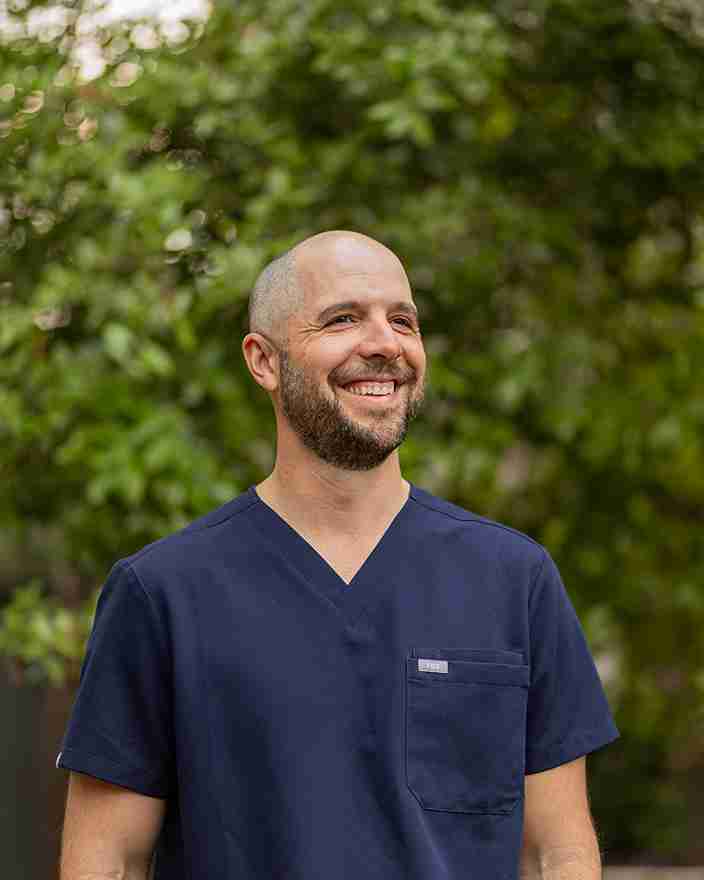
Brian P. Kelley, MD
Double board-certified reconstructive surgeon in Austin, Texas. Author of The Income Variable.
About the author



The earning side is changing. Stay ahead of it.
Join the launch list for book updates, new articles, and free companion tools.
By submitting, you agree to our Terms of Use and acknowledge our Privacy Policy.